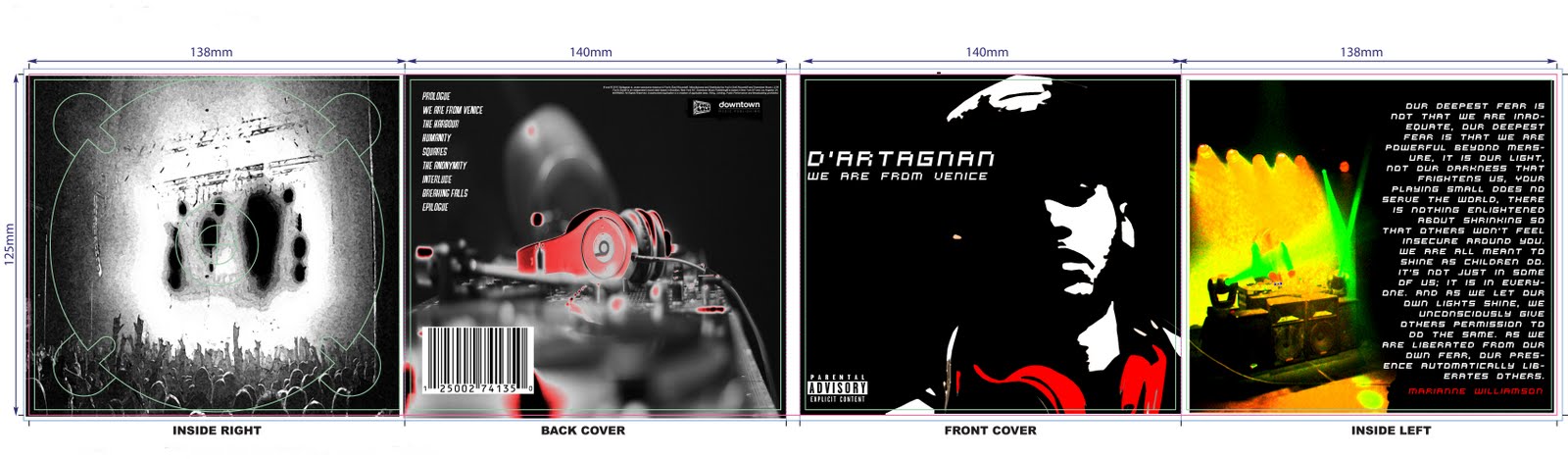
When we initially began the research stage of the production of our pop video, we looked at real pop videos, to try and get an idea, or an inspiration to form the basis of our pop video. After looking at "Declaration of War" by Hadouken! and "Stress" by Justice, we decided that we liked the extended use of documentary style filming, and we liked the gritty and seedy realism that it promoted through the use of handheld camera shots, almost as if to put the audience in the midst of the chaos. The main story arc conveyed a group of teenagers, no older than myself, wreaking havoc around the city they lived in, somewhere in Paris. The gang were menacing, and as a member of the audience I felt repulsed and dragooned by them. We knew from that moment that we wanted to create the same fear and repulsion as Romain Gavras (The Director) had done, this coupled with the sense of nothingness and disequilibrium we felt was the foundation for a good pop video. It was at this point we knew that we had to subvert all, or at least some, of the main conventions set out by Negus. We also knew that we had to work in plaisir, the thrill the audience expects from a pop video, but we felt more drawn towards Barthes' terms of jouissance, the unexpected.  One example from this in our video, may be the ending, where instead of the video coming to a definitive end, the video merely fades out, leaving the ensuing conflict unresolved, this in itself is a reflection on modern society wherein most conflicts of a similar nature are left unresolved, such as knife crime and the progression of gang warfare in London. In order to gain the ability to use these conventions well, we had to understand the main conventions of pop videos, and learn them in order to insert them effectively into the narrative. As Negus explains, the main conventions of a pop video are; the explicit and unashamed promotion of the artist’s “image” as a specific product with a brand identity, ready for mass consumption; the featuring of the artist; a wide and extensive use of shot types, camera angles and movement; repetition of reoccurring thematic elements and generically specific iconography; a possible narrative structure; a possible performance element; the flexibility to disregard realism; shots cut tightly to the beat of the track; use of special effects; a carefully constructed Mise en Scene appropriate to the content and tone of the track; high impact instantly.
  We had initially chosen a quite difficult song to invent a video for, as the song we had chosen had no lyrics, so the message of the song, is personal and individual to every viewer. For us, we saw a liberationist agenda, and to a certain extent a post apocalyptic era. In many ways the video is hugely stereotypical, as all the gang members look dangerous, and it seems their sole motif in society is to cause disruption and disregard the rules. Our personal agenda probably was a little temperamental, and we know that not all members of gangs are this way inclined, and we know that if we had not followed this stereotype, we would not have gained the same vivacity we achieved in the final product.
 The lack of lyrics in the piece made things seem distorted, which inadvertently worked in our favour, as this was exactly what we were trying to achieve. We had no intention of showing a band or main leader, because this was not how we wanted to portray our artist, we in fact actively tried to obscure his identity, we wanted to subvert the convention of "shameless" promotion of a star, and we wanted it to coincide with the recurring theme of the enigmatic in our piece. A large part of our mentality was to let audiences make up their own mind about the artist as they watch the video, we didn't try to make him a hero, more a kind of ethereal middle ground between two extremes.
 The narrative in which we see the DJ, imitates a number of Negus’ conventions; the featuring of the artist, repetition of reoccurring thematic elements and generically specific iconography and shows that it is cut tightly to the beat of the track. The scene subverts the rule of thirds, as the DJ was intentionally positioned in the middle, subverting the conventions of composition, to create a rebellious attitude, not just in his performance, but also in the filming.
 One of our final scenes, was the scene detailing a rusted old burning car, that clearly integral to one of the bands daily activities. In this instance we challenged the normal conventions of pop videos, by leaving the audience on a cliff hanger, and instead or telling them what happens, we leave it to individual interpretation. However we do conform to Negus' convention of "high impact instantly". Everything in the gang scenes that we shot was decided on location. Filming as quickly and with as much improvisation as we did, it is hard to remember the sheer number of shots individually, but we were definitely trying to reflect the pace of the song through the pace of our work and ultimately the pace of our finished product. We did however have to carefully plan out two scenes, as we only had one chance at these, the scene wherein the fridge was smashed, and the final scene depicting the flares, so for these two shots we imitate the main conventions of constructing a pop video.
 With regards to camera movement, we in essence were wholly spontaneous, naturally the DJ shots took a lot of planning and preproduction, but everything, other than the two previously mentioned shots, that we shot on location was improvisational, as we chose to use ideas that we conceived on the day. To obtain the handheld, documentary style that we highly sought after, we had to forget about the conventions and do some very avant-garde filming. In terms of Negus, we did imitate his convention of "the flexibility to disregard realism", because had we been realistic in shooting the gang scenes, the final product would have looked more like a news-piece than a music video.
Handheld documentary filming meant that we could take the audience into the middle of the action, giving them a very intimate feel for what was going on and the characters involved. We were also not afraid to let the shots run very short or very long, nor to be out of focus at times or to have odd angles. This all gave the piece a feeling of fly on the wall observational documentary, as explained by Michael Rabiger in his book 'Directing the Documentary'.
 Most pop groups and singers in the modern digital world make their money more from touring than from CD sales. So when a new song is issued a campaign is mounted through the pop video and the digipack to drive punters to the concerts, where the main money is made. This is argued by Negus and Fiske in their various books. The magazine advert has to play off and use the same images as the pop video and the digipack if a ground swell of interest and support is to be created in the potential audience.


 In terms of Distribution and Evaluation, we distributed the video through YouTube and Vimeo, and I have also posted the video on Facebook to try and draw attention from the social network. All the sites have had nothing but positive feedback. If we were marketing the song as a whole, we might go about purchasing adspace on popular websites such as Google, Facebook, YouTube and Amazon. The Internet is the key to our distribution.
 After months of deliberation and about twenty hours spent in front of a computer screen, I have finally finished editing my pop video. The editing package we were entitled to was Final Cut Pro with Adobe After Effects, although in the end I didn’t need to use Adobe After Effects because of the calibre of the footage we shot on our shoot day. As I edited my pop video, I found more and more that I was taking the pop video in a better direction than our storyboards depicted, thus I built on my own ideas as opposed to the ones I had previously laid out. This isn’t to say that we changed the idea; some of the elements we had pre-planned were included. For example the introduction wherein the DJ is clapping or the scene with the man walking away from the car.
 As far as a rough cut is concerned, my pop video was already at its final stages; I never actually had a designated rough cut. I went straight to my fine cut. I had various alterations to make to the structure after the film in itself was ‘finished’ and I still needed to make sure the film stuck to its continuity style of editing. An example of one error I made in terms of continuity is where the gang scene breaking the fridge are doing their ritual of blood brothers, I cut in a shot that portrayed someone different performing the act, this didn’t work as the focus was taken away from the grim nature of the act, and left the audience confused. I changed this by putting in an establishing shot of the gang.
 I chose to use continuity editing because discontinuity editing would have, in my opinion, taken away from the main narrative. Continuity Editing is when you edit a video to make sense visually, for example a man wearing a red hat continues to wear the same red hat throughout the video. Discontinuity is where you edit a video to create a sense of unrest in the viewer, usually building to some kind of climax.
 This is another example where I have used the rule of thirds, the eye is drawn to the obscured face of the DJ, wherein the point of this shot is to subvery stereotypical star promotion, most pop videos would have a the lead star spangled and front and foremost in their pop video, here we have chosen to obscure the DJ's face because it is not about who he is or where he was come from, but about his music and the narrative.