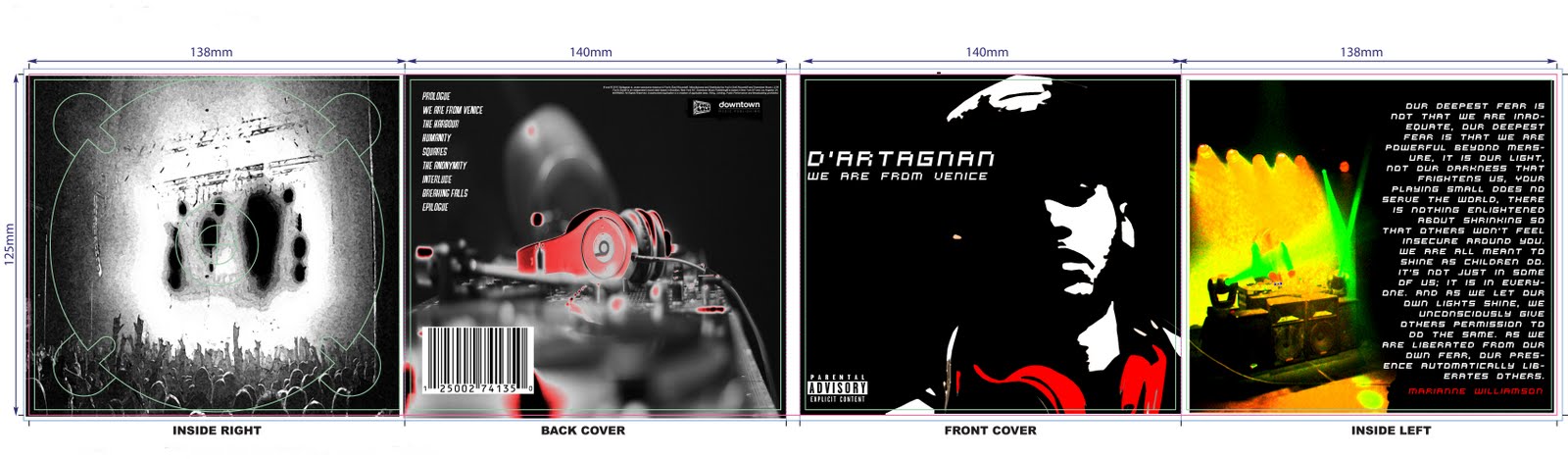
Having collected a variety of feedback for our pop video and ancillary products from members of the target audience and from other members of the audience demographic. (Via YouTube, a Focus Group and other sources).
Our target audience was 16-25 year old males from JICTAR groups C, D and E. Generally speaking, groups C, D and E are less sophisticated people from poorer socio-economic backgrounds, but these social categories are big spenders on pop music and related commodities. C is people who are skilled but not academically educated, such as builders and electricians. D is families and people who labor and E are the unemployed. This applies to these JICTAR groups because of the people and the content of the video; the video features people of a poorer socio-economic background and the video details needless violence and vandalism.

The video was posted on Vimeo, YouTube and Facebook, from the three only YouTube and Facebook received comments, and all of these comments were positive. The comments included;
From YouTube
− “This is amazing” – bonesbilly545
− “Yesssss this video is ill” – skeme14
− “Amazing video” – kreitylowTheNINJA
From Facebook – On the Facebook liking system, 17 people like this.
− “Amazing. X” – Natalya Holley
− “Sik Video” – Kaleem Khan

The Focus Group contained of seven students, four male and three female. We gave a questionnaire containing ten questions to the group. We wanted the group to watch the video once before answering the questions, this would allow time for the group to think and come up with sensible answers before answering them. The idea was to simply find out if they enjoyed it, and to see if they understood what had happened and perhaps if they had gained any other meaning from the video or even the song. After they had answered the questions, we had a discussion as a group, in which we discussed questions, and their responses, and we attempt to usher them to elaborate on their statements. The supplementary discussion was actually more useful than the questionnaire itself; the verbal response seemed more emotional. One male student, Will Edgely, an 18 year old from Dorking said the video was “to a great song, and the emotion of the song, despite the lack of lyrics, really fitted the video”
The questionnaire was as follows:
1) Did you enjoy it? Why?
2) What did you get out of it?
3) What did you think the message of the story was?
4) Did you think the brand was established? How?
5) Do you think it is sexist/bias in any way?
6) Did you identify with any of the characters? How? Who?
7) Did it tell you anything about relationships?
8) Did it give you any information about the world today?
9) What is the official image that you received?
10) How do you think it can be improved?
In terms of Blumler and Katz’s theory of uses and gratifications, we tried to fulfill two of the specified areas as defined by them; we also aimed to apply their theory to our audience response. Blumler and Katz say that watching TV fulfills four basic needs. These are; Diversion (a form of escape from everyday mundanity), Personal Relationships (companionship via TV personalities and characters), Personal Identity (the comparison’s drawn between the characters and your own life) and Surveillance (a supply of information concerning the welfare of the world). In terms of our pop video, diversion occurs, when the audience watches and empathizes with the activities of the gang, or feels envious of the nonchalance in their daily activities, but because they are bound to the confines of their life, they cannot do these random acts, instead the relate with the video because it forms an escape for them. Surveillance occurs because the video shows the world in a state of disarray, where amongst a dystopian society, the broken lives appear to be the ones that shine, and the activities of young people are needlessly violent because there is simply nothing else in their lives.

Stuart Hall suggests a theory that producers encode a preferred message that the audience proceeds to decode in any one of three ways. These ways are either the audience accepting the preferred meaning, or they become oppositional readers, rejecting the preferred message, or negotiated readers, wherein they decipher their own meaning. The pop video has a preferred meaning, wherein the DJ is edgy rebellious and controversial. The meaning of the narrative is that the world is potentially violent and dangerous. The males in the focus group read the preferred meaning of both, but the females in the group rejected the second meaning, not believing the video was an accurate representation of a state of affairs in modern gang culture, instead arguing that the video “glorified needless aggression”. However, the Internet comments received were positive from both genders, so we cannot draw the conclusion that women reject the second meaning.

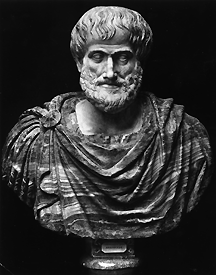
Aristotle, the Greek philosopher, not by any means a media theorist, introduced his ideas of Ethos, Pathos and Logos, arguing that the goal of argumentative writing was to persuade the audience that your ideas are valid, or more so than someone else’s. Ethos or simply credibility was the convincing of the characters and narrative by means of the author, meaning that we tend to believe people who we respect. Pathos or the emotional is the persuading by means of appealing to the reader or watcher’s emotion. Logos or words, was the persuading by mode of words, or in the case of pop videos, lyrics. With regards to our pop video, only Ethos and Pathos apply, as our video features no lyrics. Ethos applies because the DJ, the author, imposes the narrative and the DJ is a respectable character, his musical prowess demands respect from all ages, giving him the deserved credibility. Pathos applies because the video details emotions at their highest peaks, the viewing of the destruction of modern artifacts, and at their most suppressed, the gang members themselves who look like they have had it hard all their life.

I think that overall the performance element of the pop video worked beyond expectations; maybe if we were to reshoot we may have changed location to bring him closer to the narrative and emphasize the dystopian society. The narrative did work, but I felt we tried to hard to blur the lines between the gangs, and that they appeared too similar in appearance, we did try to achieve a certain similarity between them, but this could have been achieved through camerawork and editing, and if we were to reshoot I would the gangs wearing noticeably different clothing, with different modes of destruction, and perhaps alternative semiology that showed their unison as a gang.





 In terms of Distribution and Evaluation, we distributed the video through YouTube and Vimeo, and I have also posted the video on Facebook to try and draw attention from the social network. All the sites have had nothing but positive feedback. If we were marketing the song as a whole, we might go about purchasing adspace on popular websites such as Google, Facebook, YouTube and Amazon. The Internet is the key to our distribution.
 After months of deliberation and about twenty hours spent in front of a computer screen, I have finally finished editing my pop video. The editing package we were entitled to was Final Cut Pro with Adobe After Effects, although in the end I didn’t need to use Adobe After Effects because of the calibre of the footage we shot on our shoot day. As I edited my pop video, I found more and more that I was taking the pop video in a better direction than our storyboards depicted, thus I built on my own ideas as opposed to the ones I had previously laid out. This isn’t to say that we changed the idea; some of the elements we had pre-planned were included. For example the introduction wherein the DJ is clapping or the scene with the man walking away from the car.
 As far as a rough cut is concerned, my pop video was already at its final stages; I never actually had a designated rough cut. I went straight to my fine cut. I had various alterations to make to the structure after the film in itself was ‘finished’ and I still needed to make sure the film stuck to its continuity style of editing. An example of one error I made in terms of continuity is where the gang scene breaking the fridge are doing their ritual of blood brothers, I cut in a shot that portrayed someone different performing the act, this didn’t work as the focus was taken away from the grim nature of the act, and left the audience confused. I changed this by putting in an establishing shot of the gang.
 I chose to use continuity editing because discontinuity editing would have, in my opinion, taken away from the main narrative. Continuity Editing is when you edit a video to make sense visually, for example a man wearing a red hat continues to wear the same red hat throughout the video. Discontinuity is where you edit a video to create a sense of unrest in the viewer, usually building to some kind of climax.
 This is another example where I have used the rule of thirds, the eye is drawn to the obscured face of the DJ, wherein the point of this shot is to subvery stereotypical star promotion, most pop videos would have a the lead star spangled and front and foremost in their pop video, here we have chosen to obscure the DJ's face because it is not about who he is or where he was come from, but about his music and the narrative.
 On the day itself we shot in the studio from 9:00 to about 13:00. We ran through the song a large number of times, we did run the song over a couple of times so the DJ could practice his performance and get a feel for the song. We shot the DJ performing from a number of different angles and incorporating a large number of movements. In this element of the music video Leo Faulks and I manned the camera and Tamara Middleton and Millie Freeman were in charge of playback and making sure that everything on set was perfect, this included the lighting, and making sure the performer was doing what he was meant to be doing and that he was on set when we needed him.
 On the camera, myself and Leo had to make sure the levels were all okay and that we got all the shots we needed, this consisted various movement shots, including panning and tracking shots. We tried to shoot the DJ from a slightly lower angle, a hero shot, to promote his status and to give him a heroic lift from the rest of the video, which depicts gang initiations and violence.
 The only real problems we had were in pre-production, where we were denied to access to our first and second locations unless we could have the “necessary” health precautions, which in the council’s eyes was an ambulance and a fire truck, which would have cost money that we didn’t have. A slight problem that we really had on the day was from the weather, we were due to shoot exterior shots after 13:00, but we waited for a short while for the rain to slow a bit. Luckily it slowed down at about 13:30, and we were able to manage until it completely stopped with only a few umbrellas.
 We did make a few mistakes on the day when we failed to white balance correctly and choose an appropriate shutter speed on location. This rendered about twenty of the two hundred shots redundant. But we corrected this problem once we had realised that this was occurring and the remainder of the shots we had were artistic and well thought out. In the studio we did have a minor issue with playback as the CD with our track on it didn’t work in the CD player, but this problem was quickly solved when I fetched my laptop, which we connected to the sound system through the auxiliary/phono input.
 One of the shots the really worked was of the DJ, it was during the middle of the song, and the DJ was on the hot point (using the rule of thirds) in the top right hand corner, the DJ decks occupied the bottom two hot points and the upper left hot point led the eye away fro the DJ, because the flashing lights caused an effect of the white background which synced perfectly with the melody of the song. We used this shot in our final cut at the exact point in which we shot it because it works just so perfectly.
 Another shot that really worked was shot on location, it was shot from a slightly canted angle, with the camera being handheld, giving the shot an edgy realistic feel. The shot depicted the ultimate climactic battle between the two gangs, with one gang threatening with the use of flares. The shot worked so well because the camera’s movement is similar to that of a heartbeat. The main focus of the shot is a lit handheld flare, which occupies the uppermost right hand hot point. The best part of the shot in my opinion is the debris and smoke, which partially obscures the other characters, and adds a mysterious element to the shot. Other than the botched white balance shots mentioned earlier, there weren’t many bad shots. There was one however that didn’t work, were a gang member was meant to appear prolific and intimidating, but instead they had a grin that really fit with the mise-en-scene.
 Overall the day went really well, we stuck to out plans very well, and although the final product didn’t follow our storyboards closely. I felt that the final product was of an excellent quality. We did follow the basic structure but we also filmed many shots that weren’t originally scripted, and I felt the inherent spur of the moment shots we incorporated worked very well indeed. It was these shots that made our pop video what it was in the end, and it was these shots that made our pop an exceptional final product.
 .As a collective, we must understand that the pop video is only one strand of an often multimedia campaign. Multimedia campaigns often include Television, Radio, Newspapers, Magazines, Internet and Shopping Malls. The pop video naturally fits into the Television aspect of this campaign, and along with this there is often a “Making the Video” special aired to go with pop videos. In radio, the DJ’s are sometimes bribed to play an excess of a certain record. In newspapers there are often square advertisements that depict an artist’s new record or a tour supporting the record, this would be the same in magazines, also there might be a featurette with a “Meet the Band” style article, attempting to bring the band down to earth. The Internet is a limitless resource, and through this there are websites such as MySpace (
 Music Videos serve more than one purpose; they serve as a method of promotion for an artist, promoting an artist and usually their album; they create, adapt, and feed star images; it entertains as a product in its own right; and last but not least it reinforces, adapts or undermines the meanings of a song. Music videos often include four basic elements; performance; narrative; thematic; and symbolic. My video should serve to do all of these things, the content of the video focuses more so on the performance and narrative than the thematic and the symbolic. It many respects the music video is becoming defunct and irrelevant. This is largely down to peer2peer sharing on the Internet through websites like Limewire (http://www.limewire.com) and BearShare (http://www.bearshare.com), and how music television (MTV, VH1, VIVA etc.) (